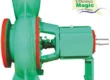
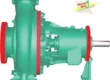
screw pumps designed and manufactured in Coimbatore, India for industrial application
Screw pumps are widely used in industries that require smooth, continuous, and pulse-free fluid transfer. From handling viscous oils to delicate chemical liquids, screw pumps offer reliable performance across multiple applications. Because of their versatility, many engineers and buyers search for information on screw pump working, screw pump parts, screw pump types, and screw pump working principle.
This guide explains everything you need to know in a simple, practical way.
What Is a Screw Pump?
A screw pump is a positive displacement pump that moves fluid along the axis of rotating screws. Unlike centrifugal pumps, screw pumps deliver a constant flow regardless of pressure changes, making them ideal for viscous, sensitive, or high-pressure fluids.
These pumps are commonly used in oil & gas, chemical processing, marine systems, power plants, paper mills, and lubrication systems.
Screw Pump Working Principle
The working principle of a screw pump is based on the movement of fluid through sealed cavities formed between rotating screws and the pump casing.
How it works step-by-step:
Fluid enters the pump through the suction port
Rotating screws trap the fluid in cavities
The fluid moves axially along the screw length
Continuous rotation pushes fluid to the discharge side
There is no pulsation, no turbulence, and no sudden pressure change, which makes screw pumps extremely gentle on the fluid.
Screw Pump Working (In Simple Terms)
Screws rotate in a synchronized motion
Fluid is carried smoothly from inlet to outlet
Flow remains steady even at high pressure
Performance is unaffected by viscosity changes
This makes screw pumps ideal for continuous duty operations.
Types of Screw Pumps
There are three main screw pump types, each designed for specific applications:
1. Single Screw Pump (Progressive Cavity Pump)
One rotor and stator
Handles sludge, slurry, and viscous fluids
Used in wastewater, food, and chemical industries
2. Twin Screw Pump
Two intermeshing screws
Suitable for multiphase fluids
Used in oil & gas and chemical processing
3. Triple Screw Pump
One driving screw and two driven screws
High-pressure, smooth operation
Common in hydraulic and lubrication systems
Main Screw Pump Parts
Understanding screw pump parts helps in maintenance and selection:
Screws (rotors): Core pumping element
Pump casing: Encloses screws and directs flow
Inlet port: Fluid entry point
Discharge port: Fluid exit point
Bearings: Support shaft rotation
Mechanical seals: Prevent leakage
Timing gears (in some models): Synchronize screw rotation
Each component plays a critical role in ensuring efficiency and durability.
Advantages of Screw Pumps
✔ Handles high-viscosity fluids
✔ Smooth, pulse-free flow
✔ Low noise and vibration
✔ High pressure capability
✔ Minimal shear (ideal for sensitive fluids)
✔ Long service life
Where Are Screw Pumps Used?
Screw pumps are commonly used in:
Oil transfer systems
Fuel oil and lubrication systems
Chemical processing plants
Marine and ship engines
Power plants
Paper and pulp industries
Their ability to maintain flow consistency makes them highly reliable.
Screw Pump vs Other Pump Types
| Feature | Screw Pump | Centrifugal Pump |
|---|---|---|
| Flow Type | Continuous | Pulsating |
| Viscous Fluids | Excellent | Poor |
| Pressure | High | Moderate |
| Shear | Very Low | High |
| Noise | Low | Higher |
Conclusion
A screw pump is a powerful and efficient solution for applications that demand smooth, continuous, and reliable fluid transfer. With different screw pump types, well-engineered screw pump parts, and a simple yet effective working principle, screw pumps outperform many conventional pumps in industrial environments.
Understanding screw pump working helps you choose the right model for your application and ensures long-term performance with minimal maintenance