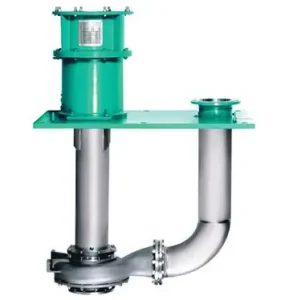
High-performance vertical slurry pump built for handling abrasive slurries in mining, dredging, and processing industries.
Pumps are essential in industries such as mining, power plants, cement, chemicals, wastewater treatment, and paper manufacturing. Among the most commonly discussed pump types are centrifugal pumps and slurry pumps. While both pumps operate on centrifugal force, they are designed for very different applications. This leads many engineers and buyers to ask: What is the difference between a centrifugal pump and a slurry pump?
Understanding this difference is crucial to selecting the right pump and avoiding premature failure or costly downtime.
1. Basic Function and Purpose
Centrifugal Pump
A centrifugal pump is designed to transfer clean or slightly contaminated liquids. It uses a rotating impeller to generate centrifugal force, moving liquid through the pump efficiently.
Common uses include:
Water supply systems
Chemical processing (clean liquids)
Cooling water circulation
Irrigation
Boiler feed applications
Slurry Pump
A slurry pump is specially engineered to handle liquids mixed with solid particles, known as slurry. These solids may be abrasive, corrosive, or heavy.
Common uses include:
Mining and mineral processing
Ash handling in power plants
Cement and steel industries
Dredging
Wastewater and sludge transfer
2. Nature of the Fluid Handled
This is the most important difference.
| Pump Type | Fluid Type |
|---|---|
| Centrifugal Pump | Clean or low-solid liquids |
| Slurry Pump | High-solid, abrasive mixtures |
A normal centrifugal pump cannot handle high solid content without damage.
3. Design and Construction Differences
Centrifugal Pump Design
Lightweight construction
Standard impeller
Narrow clearances
Designed for efficiency and flow
Slurry Pump Design
Heavy-duty construction
Thick casing and liners
Open or semi-open impellers
Wide internal clearances
Slurry pumps are built to resist abrasion and erosion caused by solid particles.
4. Materials Used
Centrifugal Pumps
Cast iron
Stainless steel
Bronze
Engineering plastics
Slurry Pumps
High-chrome alloy
Rubber-lined casings
Hardened steel
Abrasion-resistant materials
These materials significantly increase slurry pump durability.
5. Wear and Maintenance
Centrifugal pumps handling slurry wear out quickly due to erosion. Impellers, seals, and casings fail rapidly.
Slurry pumps, however:
✔ Are designed for heavy wear
✔ Have replaceable liners
✔ Allow longer service intervals
✔ Reduce maintenance costs
This makes slurry pumps far more economical for solid-handling applications.
6. Efficiency vs Durability
Centrifugal pumps focus on hydraulic efficiency and high flow rates.
Slurry pumps prioritize durability and reliability over efficiency.
In slurry applications, sacrificing some efficiency is acceptable to gain longer pump life.
7. Can a Slurry Pump Be Considered a Centrifugal Pump?
Yes. Technically, a slurry pump is a specialized type of centrifugal pump, but it is specifically engineered for abrasive and solid-laden fluids.
Using a standard centrifugal pump in slurry applications often results in:
✘ Rapid wear
✘ Frequent breakdowns
✘ High maintenance cost
✘ Unplanned downtime
8. Which Pump Should You Choose?
Choose a centrifugal pump if:
✔ You are pumping clean water or chemicals
✔ Solids content is minimal
✔ Efficiency is the main concern
Choose a slurry pump if:
✔ The fluid contains solids or abrasives
✔ You work in mining, ash, or sludge handling
✔ Durability and uptime are critical
Conclusion
The key difference between a centrifugal pump and a slurry pump lies in their design purpose. While both use centrifugal force, centrifugal pumps are meant for clean liquids, and slurry pumps are engineered to handle abrasive, solid-laden fluids.
Selecting the right pump ensures longer life, lower maintenance costs, and uninterrupted operations. Manufacturers like Abirami Pumps provide both centrifugal and slurry pumping solutions designed for Indian industrial conditions.